Soft Swimbaits
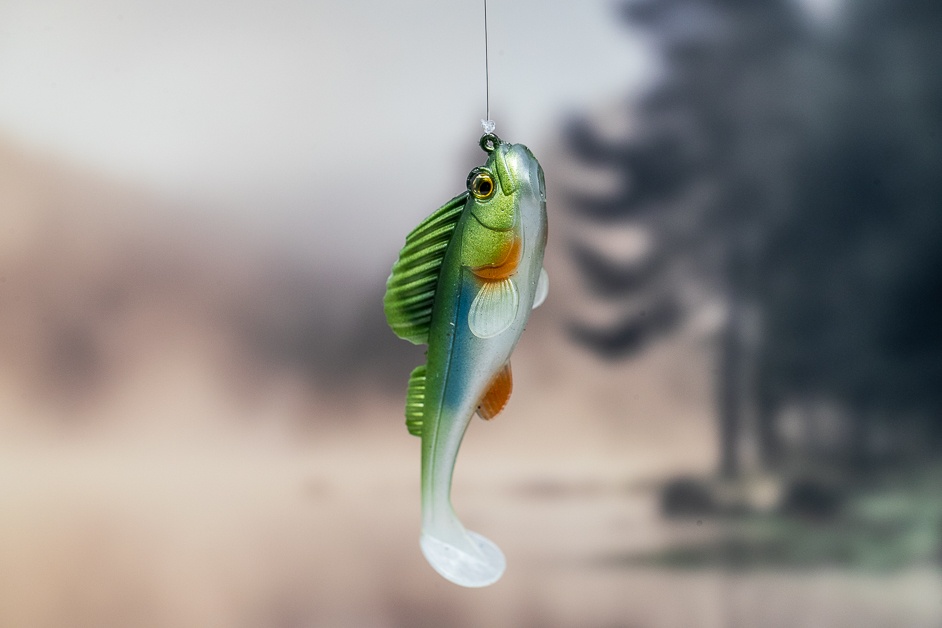
A soft swimbait is a soft plastic baitfish with a flat paddle tail that kicks from side to side as you reel. It is about the closest thing to a real shad or bluegill you can tie on, and fishing it is simple: cast it out and wind it back slowly. This guide covers the everyday sizes, from 3 to 5 inches.
- Skill levelBeginner
- Best forLargemouth, smallmouth and spotted bass
- Where it shinesPoints, grass edges, open water near baitfish
- Depth1 to 25 feet
- SeasonAll year, best in spring and fall
- SpeedSlow and steady
What a soft swimbait is
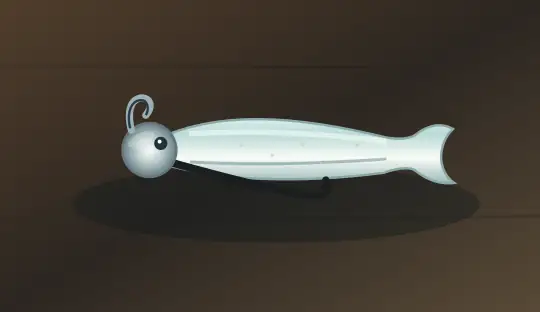
The body is shaped like a small fish. It narrows to a thin wrist near the back and ends in a flat, boot-shaped tail. When the bait moves forward, water pushes on that tail and makes it kick, and the kick rocks the whole body a little from side to side.
Nothing about it needs skill to work. It swims at slow speeds, it looks right, and fish that are feeding on baitfish eat it.
Three ways to rig it
| Rigging | What it is | Use it when |
|---|---|---|
| Jighead | The bait threaded onto a jighead with the hook point exposed | Open water, rock and points. The best hook-up rate |
| Weighted swimbait hook | A wide-gap hook with a small weight on its belly, point tucked into the bait | Grass, wood and shallow cover. It is weedless |
| As a trailer | On the back of a swim jig, chatterbait or underspin | You want more flash, bulk or vibration |
| Size | Use it when |
|---|---|
| 3 inch | Small baitfish, cold water, or hard-fished lakes |
| About 4 inch | The all-purpose size |
| 5 inch | Bigger baitfish and bigger bass |
What you need
| Item | Start here | Adjust |
|---|---|---|
| Bait | 3.8 to 4 inch paddle-tail swimbait | 3 inch on spinning gear in clear water |
| Jighead | 1/4 oz with a 3/0 hook | 3/8 oz past 10 feet. 1/8 oz to keep it near the surface |
| Line | 12 to 15 lb fluorocarbon | 8 lb on spinning gear for 3 inch baits |
| Rod | 7 ft medium-heavy casting rod with a softer tip | 7 ft medium spinning rod for small baits |
Rig it on a jighead in 3 steps
- Measure first. Hold the bait beside the jighead and note where the bend of the hook ends. That is where the point should come out.
- Thread it on. Push the hook point into the center of the nose, run it straight down the middle and bring it out of the back at your mark.
- Check it. The bait must lie dead straight, with the tail pointing down. Pull it through the water beside you. It should swim upright without rolling.
How to fish it: three retrieves
Slow roll
The standardCast, let it sink to the bottom, then reel just fast enough to feel the tail kicking. Let it tick the bottom now and then.
Count it down
Fish are off the bottomCount as it sinks and start reeling partway down. Change the count on each cast until you find the depth the fish are at.
Just under the surface
Over grass, with a weedless hookHold the rod tip up and reel so the bait runs a few inches down and bulges the surface. Bass come up out of the grass for it.
What a bite feels like
A thump, or the bait simply getting heavy. Keep reeling until the rod bends, then sweep the rod to the side. If you set the hook the instant you feel a tap, you will often pull the bait away.
Season by season
| Season | Where | How |
|---|---|---|
| Winter (below 50°F) | Steep banks, deep points, around schools of baitfish | 3 inch bait, slow roll close to the bottom |
| Pre-spawn (50 to 60°F) | Points and flats leading to spawning areas | Slow roll. One of the best times for a swimbait |
| Post-spawn (70s) | Around schools of shad and bluegill beds | Count it down, or run it just under the surface |
| Summer (80°F and up) | Over grass early and late. Offshore points and ledges by day | Weedless over grass. 3/8 oz jighead deep |
| Fall (cooling) | Creek arms and flats where shad gather | Count it down under the baitfish |
Rig a 4 inch swimbait on a weedless, lightly weighted hook and reel it slowly along the edge of the weeds and past dock posts. In ponds where bass feed mainly on bluegill, a green or bluegill-colored bait often does better than a shad color.
Color: match the food
White, pearl or a silver shad color where bass eat shad. Green pumpkin or a bluegill pattern where they eat bluegill. Something darker on cloudy days and in stained water.
Common mistakes and the fix
- Rigged crooked. The bait rolls on its side or spins. Take it off and thread it again, straight down the middle.
- Reeling too fast. Most swimbaits work best slowly. Reel only fast enough to feel the tail.
- Jighead too heavy. You have to reel fast to keep it up. Go lighter and slow down.
- Setting the hook on the first tap. Keep reeling until you feel weight.
- Open hook in grass. Switch to a weedless swimbait hook.
Watch it done

Video: Soft Swimbait Buyer’s Guide: Rigging, Colors, and Styles, by TacticalBassin on YouTube.
Common questions
What size should I start with?
About 4 inches on a 1/4 oz jighead. It casts easily, matches common baitfish and catches bass of every size.
Which way up does it go?
With the paddle tail hanging down. Most baits also have a flat or slotted belly and a rounded back to show you.
What is the difference between a soft swimbait and a hard swimbait?
A soft swimbait is molded plastic, inexpensive, and rigged on a hook or jighead of your choice. A hard swimbait is a jointed, rigid lure with its hooks built in, usually larger and aimed at bigger fish.
Will other fish eat it?
Yes. Striped bass, white bass, walleye and pike all take paddle-tail swimbaits.
Keep learning
General guidance, not a guarantee of a catch. Follow state fishing regulations and your host’s lake rules. Sizes and line weights are common starting points used by bass anglers; adjust for your water.