
How Big Is Your Pond, Really? Measure Area and Volume Before You Manage It

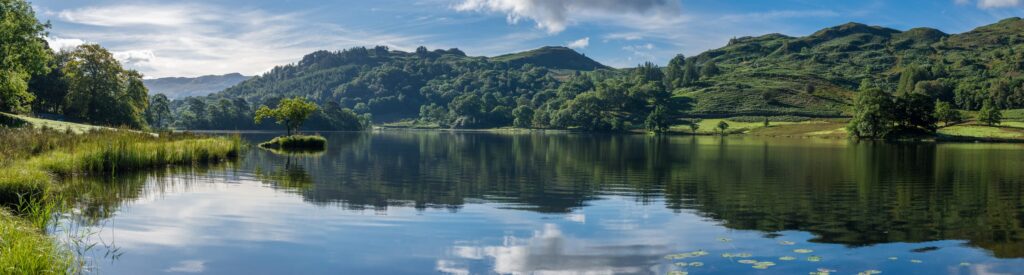
One of the easiest pond-management mistakes is starting with a treatment, stocking plan, or aeration question before you know how much water you actually have.
Surface area and water volume show up again and again in pond-management decisions. They affect how you compare stocking recommendations, size aeration equipment, estimate liming needs, and understand product labels for aquatic-plant control. A rough visual guess is usually not good enough.
Start with surface area
If your pond is close to a simple shape, basic measurements can get you started. For a rectangle, multiply length by width to get square feet, then divide by 43,560 to convert square feet to acres.
Irregular ponds need a better approach. Penn State Extension recommends taking multiple width and length measurements, breaking the pond into smaller shapes, or using mapping/GPS tools to trace the shoreline. The more irregular the shoreline, the more useful those extra measurements become.
Then estimate average depth
Maximum depth alone does not tell you how much water is in the pond. A better estimate comes from taking depth measurements at several representative locations and averaging them.
If you can safely reach different parts of the pond from a boat, a marked line and weight can be enough for a basic depth survey. Try to include shallow and deep areas instead of sampling only the middle.
Calculate volume in acre-feet
Once you have surface area in acres and average depth in feet, multiply them:
Pond volume (acre-feet) = surface area (acres) × average depth (feet)
One acre-foot is about 325,851 gallons. You usually do not need to convert everything to gallons, but the number helps show how quickly a small error in area or depth can become a large error in total water volume.
Why this matters before treatment
Accurate measurements matter most when a recommendation depends on the amount of water being treated. Penn State Extension specifically identifies pond area and volume as important for management activities such as aquatic herbicides, liming, fish stocking, and aeration. Oklahoma State University likewise uses surface area and acre-feet when explaining aquatic-plant treatment calculations.
That does not mean you should calculate a dose from a general article and apply it. Product labels, water chemistry, the species being managed, local rules, and the portion of the pond being treated can all matter. The practical takeaway is simpler: know your pond’s measurements before you ask a supplier, Extension professional, fisheries biologist, or pond-management company for a recommendation.
A simple owner worksheet
- Approximate shoreline shape
- Surface area in acres
- How the area was measured
- Maximum depth
- Depth readings from several locations
- Estimated average depth
- Estimated volume in acre-feet
- Date the measurements were taken
- Any major water-level change since then
Keep those numbers with your other pond notes. They give you a much better starting point the next time you ask about stocking, habitat, aeration, vegetation, or water quality.
Responses