Marabou Jigs for Crappie
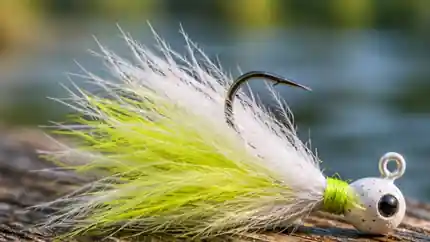
A marabou jig is a small jighead with a tuft of soft, fluffy feathers tied behind it. The feathers swell and pulse with the slightest movement of the water, so the jig looks alive even when you hold it perfectly still. That makes it the crappie lure to reach for in cold water and on days when the fish will not chase.
- Skill levelBeginner
- Best forWhite and black crappie
- Where it shinesBrush, docks, schools holding in open water
- Depth3 to 25 feet
- SeasonAll year, best in cold water
- SpeedVery slow, or still
What it is
Marabou is a very fine, soft feather. Dry, it is a fluffy puff. Wet, it slims down into the shape of a small minnow, and every fiber moves. A soft plastic lure needs you to move it. Marabou keeps moving while you do nothing.
What you need
| Item | Start here | Adjust |
|---|---|---|
| Jig | 1/16 oz | 1/32 oz in shallow water or for the slowest fall. 1/8 oz past 15 feet |
| Color | White, or chartreuse | Black and chartreuse in low light. Pink and white is a cold-water favorite |
| Line | 4 lb monofilament | 6 lb around brush |
| Rod | 6 to 7 ft light spinning rod | A longer pole for lowering it straight into cover |
| Float (optional) | A small slip float | Holds the jig still at one depth, which is exactly what marabou is best at |
A marabou jig comes ready to fish. Tie it on with an improved clinch knot, slide the knot to the top of the hook eye so the jig hangs level, and you are done.
How to fish it: three ways
Keep the jig level with the fish or just above them, and do less than you think you should.
Hold it still
Cold water, slow bitesLower it beside the cover to the depth of the fish and hold it there. The feathers keep moving without any help.
Float and twitch
From the bank or a dockHang it under a slip float. Cast, twitch the float a couple of inches, then let it sit for 10 seconds.
Slow swim
Searching for a schoolCast, count it down, and reel as slowly as you can so it stays just above the fish.
What a bite feels like
Often nothing more than a little extra weight, or the line going slack. Lift smoothly and keep steady pressure. Crappie have thin, soft mouths, and a hard jerk tears the hook out.
If you feel taps but do not hook up, the tail is too long. Pinch the feathers shorter with your fingers until they reach just past the bend of the hook. Pinching leaves a softer end than cutting with scissors.
In late fall, winter and early spring, hang a marabou jig under a float beside the deepest dock post or brush you can reach and let it sit. It is one of the few lures that catches crappie from the bank when the water is cold.
Looking after them
- Let them dry. Leave used jigs out of the box until they are dry. Wet feathers shut in a box mat together and the hooks rust.
- Keep spares. Marabou does not last as long as plastic. After a number of fish the tail thins out, and it is time for a new one.
- Fluff before use. A matted tail comes back to life if you wet it and stroke it straight.
Common mistakes and the fix
- Working it too hard. Big hops are for other lures. Small movements and long pauses catch more fish on marabou.
- Jig too heavy. A heavy head sinks fast and kills the slow, hovering fall. Go as light as the depth and wind allow.
- Fishing under the fish. Crappie feed upward. Keep the jig at their level or a little above.
- Setting the hook hard. Lift and reel.
Common questions
When is marabou better than a plastic jig?
In cold water, and any time the fish want a lure that hardly moves. In warm water with active fish, a tube jig or a minnow-style jig is tougher and just as effective.
Can I add bait to it?
Yes. A small minnow hooked through the lips, or a waxworm on the hook, often helps when bites are few.
Does it catch other fish?
Yes. Bluegill, white bass and trout all take small marabou jigs.
Keep learning
General guidance, not a guarantee of a catch. Follow state fishing regulations and your host’s lake rules. Sizes and line weights are common starting points; adjust for your water.