Bluegill Worm and Float Rig
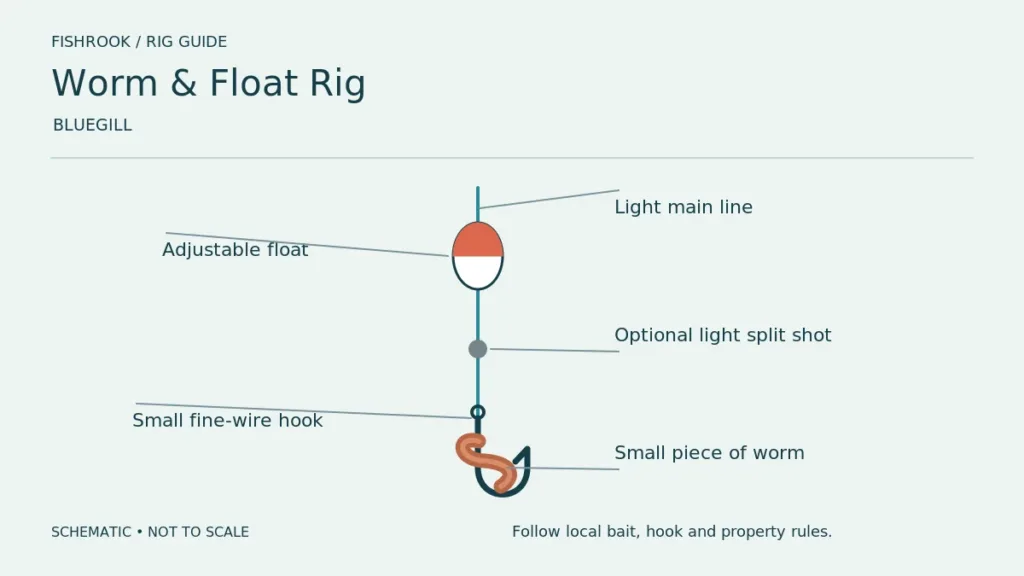
A small hook, worm piece and adjustable float for accessible bluegill fishing from shore.
When and where to use this setup
Natural worm scent and subtle movement appeal to bluegill that are feeding on aquatic invertebrates. Check posted property rules and current lake conditions before fishing.
How to fish it
Pin a small portion of worm to a fine-wire hook, attach a small float, then adjust depth so the bait hangs just above visible cover or the fish holding level.
Recommended tackle and colors
2–6 lb line, small hook, small float and optional light split shot. Natural bait; use a small hook and minimal hardware.
Reading the rig diagram
The illustration shows component order, not exact spacing. Set the distance from float to hook for the depth you want to fish. If you add split shot, use only enough to help the bait settle without pulling the float under. Start with a small worm piece so bluegill can take the hook instead of just the loose end.
Before the first cast
Check that the float stays upright, the hook point is clear and the bait will hang above snags. Watch for the float sliding sideways as well as going under. Learn more about habitat and feeding behavior in our bluegill species guide.
Common mistakes
Using too large a hook or worm, leaving the bait too deep, and setting the hook aggressively.
Adjusting your presentation
Start by matching the bait depth to where fish are holding. Work slowly when fish seem inactive, change one factor at a time, and avoid treating forecast-based recommendations as a guarantee of a catch.
FishRook educational guidance. Follow state fishing regulations, bait restrictions and the host’s lake rules.