Channel Catfish Cut Bait Slip-Sinker Rig
A bottom-oriented slip-sinker rig for channel catfish feeding along channels and points.
When and where to use this setup
Scent and a natural bait profile can attract channel catfish feeding close to the bottom. Check posted property rules and current lake conditions before fishing.
How to fish it
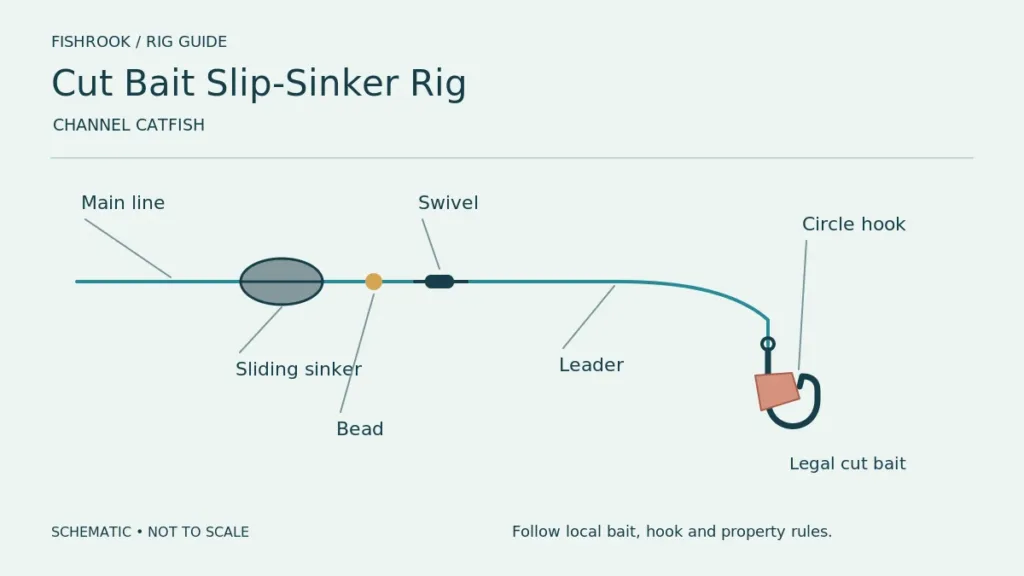
Place a suitable chunk of legal cut bait on a circle hook with a sliding weight above a swivel and leader. Cast along channel edges or gently sloping flats, then maintain enough line contact to detect a take.
Recommended tackle and colors
12–25 lb main line with abrasion-resistant leader appropriate for cover. Use legal local bait species; keep bait fresh and hook exposed.
Reading the rig diagram
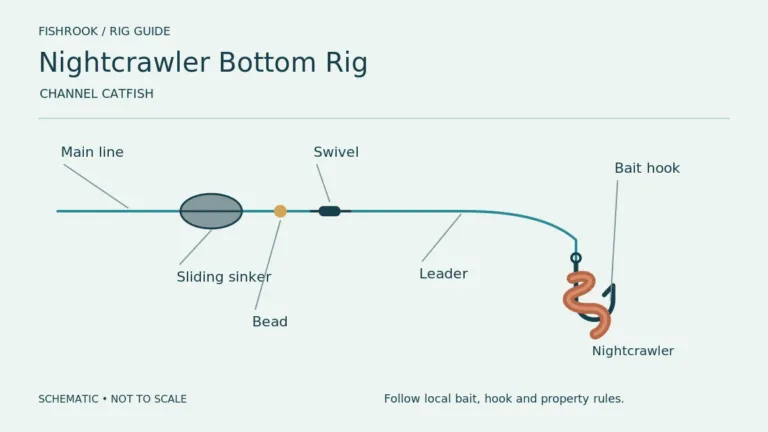
From the rod toward the bait, the main line passes through the sliding sinker and bead, then ties to a swivel. The leader connects the swivel to the circle hook. The bead helps cushion the knot. Component sizes and spacing in the illustration are schematic; choose enough weight to hold bottom without making the rig unnecessarily heavy.
Before the first cast
Check that the sinker slides freely, knots are secure and the hook point and gap are not buried in bait. With a circle hook, keep steady pressure and reel as the fish loads the rod rather than making a sharp hookset. Confirm that your bait species and cut-bait use are legal at that water. Explore the channel catfish species guide for more context.
Common mistakes
Using prohibited baitfish, leaving heavy slack, and pulling sharply before a circle hook can turn.
Adjusting your presentation
Start by matching the bait depth to where fish are holding. Work slowly when fish seem inactive, change one factor at a time, and avoid treating forecast-based recommendations as a guarantee of a catch.
FishRook educational guidance. Follow state fishing regulations, bait restrictions and the host’s lake rules.