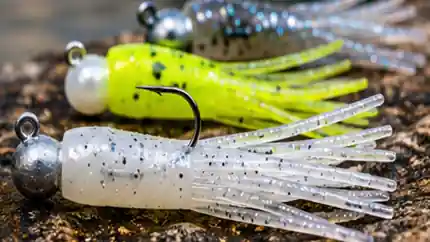
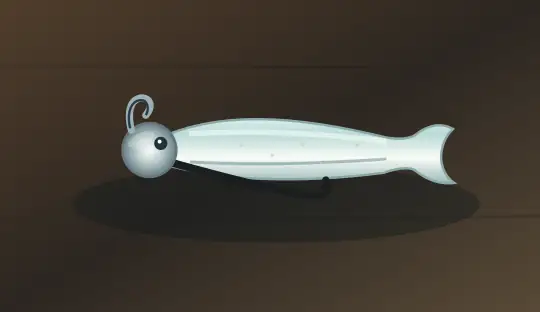
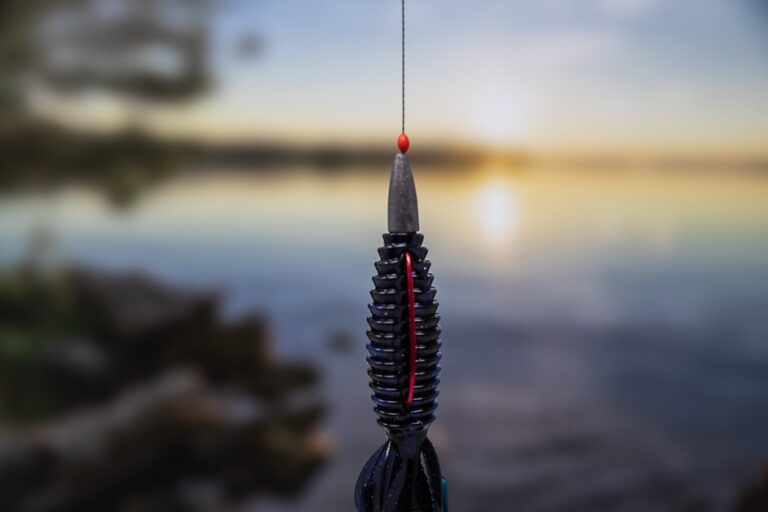
Small soft-plastic tubes offer a compact baitfish or insect profile that crappie can follow around brush piles, docks, and submerged timber. Unlike large bass tubes, crappie tubes typically pair with light jigheads and spinning tackle.
When they work
Try a small tube in spring around staging cover, summer over brush and offshore edges, and fall when fish concentrate on bait. A 1/32- to 1/16-ounce jighead is a useful starting point; increase weight only when depth or wind requires it.
How to retrieve a crappie tube
Cast past the target, let the jig sink to the fish’s depth, and reel slowly enough to maintain that level. For fish holding on deeper brush, lift gently and allow the tube to fall on a semi-slack line. Vertical presentations work when fish are directly below the boat. Watch for a line that stops falling or moves sideways.
Colors and tackle
White, pearl, shad, chartreuse, and natural translucent tones are useful starting points; stained water may benefit from increased contrast. A light or ultralight spinning rod with 2–6 lb line keeps a small jig moving naturally.
Common mistakes
Fishing too high above the school, moving the bait too quickly, or repeatedly snagging brush by dragging the jig through it. Fish the edges of cover and match depth before changing colors.
Technique guidance, not a catch prediction. Verify host rules and local regulations.
Keep Exploring
More Soft Plastics Lures
Compare another presentation before your next trip.