
Before you treat a pond plant, get a better ID

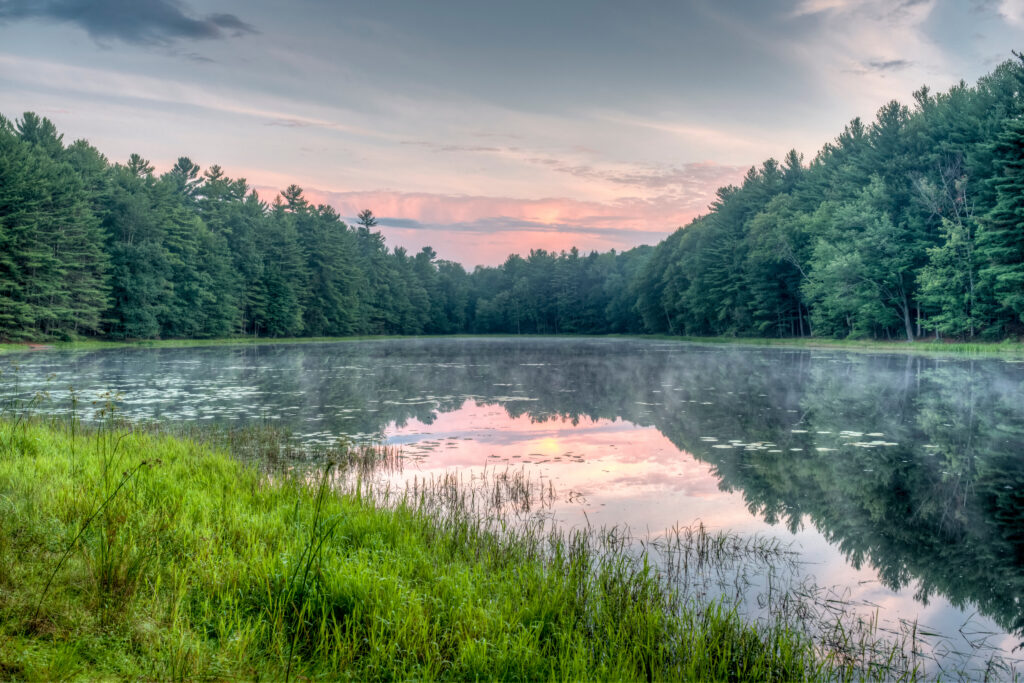
When something unfamiliar starts growing in your pond, it’s tempting to ask what will get rid of it. I’d start with a different question: what are we actually looking at?
Texas A&M’s aquatic-vegetation guidance puts identification before choosing a control method. A treatment that works for one species may do little for another. Texas A&M’s photo and identification guidance explains where to start.
You don’t need to know all the plant terminology to ask a useful question. A few clear photos and some context give the person helping you more to work with.
Take photos that show the details
Try to include:
- A view showing the plant’s overall shape.
- A close view of the stem and attached leaves.
- Any flowers or fruit that are present.
- A wider view showing where it is growing in the pond.
For a close-up, make the plant easy to distinguish from the background. Check that the leaves and stem are in focus, and include a ruler or another familiar object for size. Texas A&M recommends showing features such as leaf arrangement and where leaves attach to the stem. Its guide includes examples of useful photographs.
Keep the original photos. If you crop one to show a detail, save it as an additional image.
Describe what you can actually see
Is the growth floating on the surface, mainly underwater, or standing above the water near the bank? Those observations can help you choose where to begin in AquaPlant’s identification guide.
Look for differences within the area you’re photographing, too. AquaPlant notes that ponds can contain several kinds of aquatic plants. One name may not explain everything in the picture.
Along with your photos, write down your general location, when you noticed the growth, and how the pond is used. If you are unsure about a detail, leave it as unknown.
Know where to take the question
For an initial comparison, AquaPlant’s visual index lets you browse photographs by broad plant group. Treat a similar-looking picture as a lead to investigate.
In Florida, UF/IFAS recommends starting with your county Extension office. Its identification guidance asks for several photographs and information about the plant and its growing conditions. See UF/IFAS identification resources.
Ask the receiving office what it needs before collecting or sending a sample. Photo identification has limits: the UF Herbarium explains that some plants need closer examination, and its service does not identify algae. Its focus is Florida and the southeastern United States, so owners elsewhere should seek help appropriate to their location. See UF Herbarium identification help and service limits.
Keep the identification and the decision separate
Once you have a likely name, ask which visible features support it and what remains uncertain.
Then explain what you want to accomplish. AquaPlant notes that some pond plants benefit wildlife and may be worth retaining. Finding a plant in your pond does not, by itself, settle what you should do about it. Its identification overview gives more context.
If you bring a plant question to Fishrook Land, Lake & Pond Owners, start with clear photos, your state or general area, and what you’ve observed. Keep exact property addresses and access details private.
Has a plant in your pond ever turned out to be something different from what you first thought? What helped you get a more confident identification?
Responses