Fishing Spoons
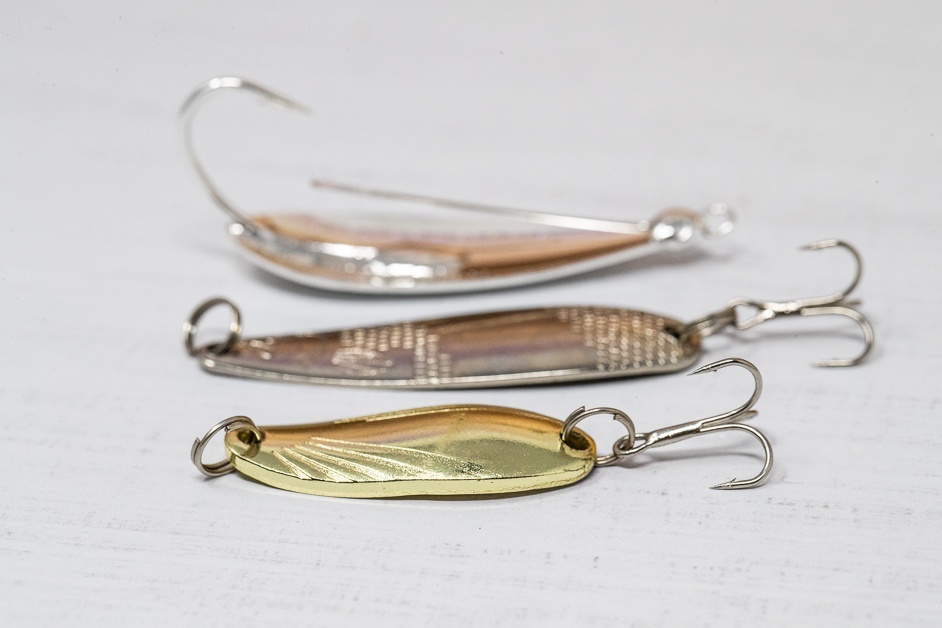
A spoon is one of the oldest lures there is: a curved piece of metal with a hook on the end. It wobbles and flashes like a dying baitfish, and almost every fish that eats smaller fish will hit one. For bass, spoons are mainly a tool for fish that are deep or schooled up in open water, which is why they shine in winter and in the heat of summer.
- Skill levelIntermediate
- Best forLargemouth, spotted, white and striped bass
- Where it shinesDeep schools, ledges, under baitfish
- Depth10 to 40 feet
- SeasonAll year, best in winter and summer
- SpeedLift and fall
What a spoon is
The shape does the work. A flat piece of metal would sink straight down. A curved one catches the water, tips, slides and rolls, and each time it turns it throws off a flash. Most of the action happens as the spoon falls, so spoon fishing is about lifting the lure and letting it drop.
Three kinds of spoon
| Kind | What it is | Use it when |
|---|---|---|
| Jigging spoon | Small, thick and heavy, 1/2 to 1 oz. Sinks fast and straight | Bass are grouped up deep, especially in winter. You fish it straight below you |
| Flutter spoon | Large, thin and wide, 4 to 6 inches. Falls slowly, rocking from side to side | Summer, on offshore ledges, for big bass feeding on big shad |
| Casting or weedless spoon | A classic wobbling spoon, often with a single hook and a wire weed guard | Cast and reeled over grass and through pads |
What you need
| Item | Start here | Adjust |
|---|---|---|
| Spoon | 3/4 oz jigging spoon in silver | 1/2 oz in less than 20 feet. Gold in stained water or under cloud |
| Line | 12 to 15 lb fluorocarbon | 17 to 20 lb for big flutter spoons |
| Swivel | A small barrel swivel tied in 18 inches above the spoon | Spoons spin as they fall and twist the line without one |
| Rod | 7 ft medium-heavy casting rod, fast action | 7 ft 6 in heavy rod for flutter spoons |
How to fish it: three ways
Jig it straight down
Jigging spoon, fish below the boatLower it to the bottom. Lift the rod sharply a foot or two, then drop the rod tip and follow the spoon back down. Repeat.
Cast and flutter
Flutter spoon on a ledgeMake a long cast and let it sink to the bottom on a slack line. Rip the rod up so the spoon jumps several feet, then let it flutter back down.
Cast and reel
Weedless spoon over grassCast past the cover and reel just fast enough to feel the spoon wobbling. Let it drop for a second into any gap in the grass.
What a bite feels like
Nearly every bite comes as the spoon falls. You will feel a tick, or the line will go slack before the spoon should have reached bottom, or there will simply be weight there when you lift. Set the hook right away.
The fall is the hard part. Drop the rod tip at the same speed as the spoon, so the line is neither tight nor loose. Tight, and the spoon cannot flutter. Loose, and you will not feel the bite.
Season by season
| Season | Where | How |
|---|---|---|
| Winter (below 50°F) | Bass and baitfish grouped tightly in deep water: channel bends, deep points, the ends of bluffs | Jigging spoon straight down, with small lifts. The best time for it |
| Spring (50s to 70s) | Bass are shallow and spread out | Other lures are better. A weedless spoon over new grass can work |
| Summer (80°F and up) | Offshore ledges, humps and points, 15 to 30 feet | Flutter spoon, cast and ripped off the bottom |
| Fall (cooling) | Under schools of shad in creek arms and on points | Jigging spoon under the bait. Watch for fish breaking the surface |
Deep-water spoon fishing does not fit most ponds. Two spoons do. A weedless spoon reeled over the top of thick weeds reaches bass other lures cannot. And a small casting spoon thrown from the bank will catch bass and whatever else lives there.
Color: keep it simple
Silver or chrome on bright days and in clear water. Gold when it is cloudy or the water has some color. White is a good third choice.
Common mistakes and the fix
- Tight line on the fall. The spoon swings toward you and stops fluttering. Follow it down with the rod tip.
- Line twist. Tie in a small swivel above the spoon, and let the line untwist every so often by lowering the bare spoon and letting it spin.
- Fishing where there are no fish. A jigging spoon is for fish you have already found, on a sonar screen or under diving birds. It is a poor lure for searching.
- Lifting too high in cold water. In winter, a lift of a foot is plenty.
- Dull hooks. Spoons bang on rock all day. Check the hook points and sharpen or change them.
Watch it done

Video: Fishing With Spoons: Everything You Need To Know For Fall and Winter, by TacticalBassin on YouTube.
Common questions
What else will a spoon catch?
Almost anything that eats fish: white bass, striped bass, walleye, pike, trout and crappie all take spoons of the right size.
Can I fish a jigging spoon from the bank?
Not well. It is designed to be fished straight up and down from a boat or a dock over deep water. From the bank, use a casting spoon and reel it.
Why do I keep snagging the bottom?
A jigging spoon with a treble hook catches on wood. Over brush and timber, change the treble for a single hook, and lift the spoon a turn of the reel off the bottom before you start jigging.
Keep learning
General guidance, not a guarantee of a catch. Follow state fishing regulations and your host’s lake rules. Sizes and line weights are common starting points used by bass anglers; adjust for your water.